You are probably wondering how environmental concerns affect your thinking and decision-making. Well, you are in luck because I have an answer for you. Your environment, such as noise, lighting, pressure, and even small details like screen settings, can change how well your brain performs.
Firstly, I will demonstrate how the two main aspects of the environment affect you physically and psychologically, while also incorporating personal experience and practical optimization to enhance the theme/your experience later.
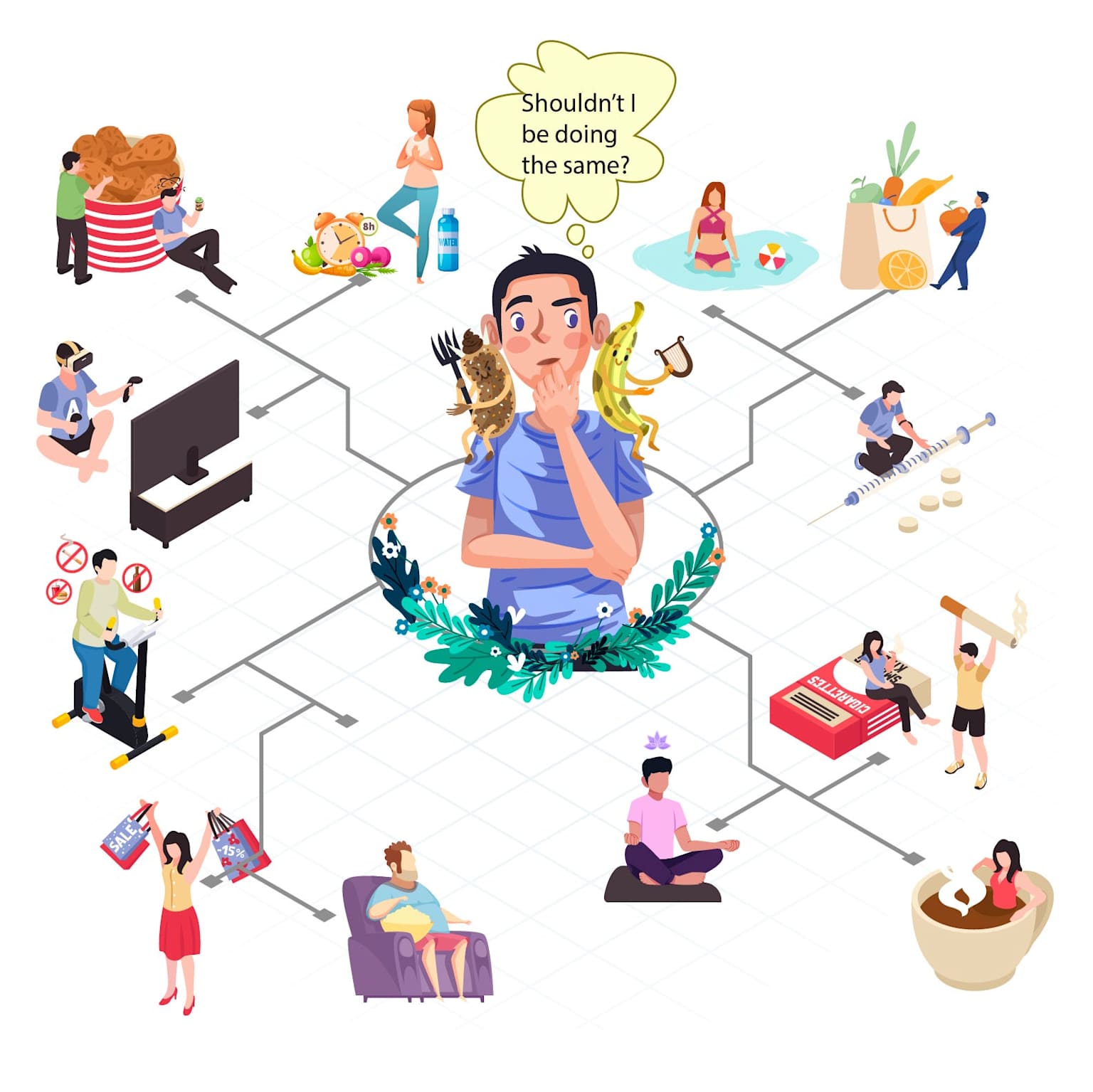
“Small changes in your environment can lead to big changes in your thinking.”
Source: “How Your Environment Shapes Your Habits,” Psychology Today (2025).
Physical Environment
How your environment affects you physically is what you will first notice, or only notice to a certain extent, just scratching the surface.
Silence
Noise is one of the main factors that can be seen to negatively affect your creativity and focus, while silence is the complete opposite, being the absolute absence of audible sound or speech, but it can still have a similar outcome. Silence can be neutral, positive, or negative, all given its circumstances, but tends to be seen negatively or neutrally.
Noise
Noise is defined as an unwanted or loud sound that lacks musical quality, often troubling others while they are completing their tasks. Meaning situations with loud noise, like talking nearby, would pull you out of your concentration, making you frustrated or irritated, disturbing the production of the task, and you.
Solution
A solution to this is sound, another type of sound, ironically, sound with quality, and that is music. Music does different things for different people because of the different backgrounds they come from. Resulting in it being one of the most popular topics debated.
Quick Summary
| Noise Type | Focus | Ideas |
|---|---|---|
| Noise/Talking | Bad — breaks your attention, makes it hard to stay on task, and pulls your brain away from what you are doing. | Harder to think clearly, harder to get creative, and your thoughts get interrupted. |
| Music | Good — helps you stay locked in, blocks out distractions, and keeps your mind steady. | It can help you think better, stay in a flow, and come up with more ideas. |
| Silence | Mediocore — it’s good for some people, but can feel too quiet or distracting if you notice every little sound. | It can help you think, but it may not always make ideas come faster. |
Psychological Environment
How your environment affects you psychologically, something that you will notice after what is physically affecting you, or simultaneously, digging beneath the surface, and spending time on what is always on your mind
How Pressure Kills Creativity
Pressure kills creativity, as shown in the case study, the “Art Party” experiment. In the experiment, one group expected to be rewarded for making the art, while the other group created the art, it knowning nothing excepting their to be no prize or reward to be worked for. Resulting in the group who were not induced with gifts making more creative and original work.
Why it Matters
This demonstrates how creativity decreases when your brain feels controlled, stressed, or overstimulated. Meaning, when coders think “I need to finish this as soon as possible,” it can reduce their debugging capabilities. Showing that it’s not just physical pressure that should be worried about its also psychological pressure too, while coding.
Practical Optimizations
- Noise Fixes (use headphones to play music on your playlist that allows you to focus)
- Lighting Tweaks (change your screen settings, night light, desk lamp to see better)
- Quick Tests (quick debugging coding sessions to make sure what works and doesn’t)
Sources/Bibliography
- How Your Environment Shapes Your Habits. Psychology Today, 15 Mar. 2025.
- How Small Habits Can Lead to Big Benefits. Greater Good Magazine, 1 Apr. 2025.
- The Impact of Different Environmental Conditions on Cognitive Performance. PubMed Central, 5 Jan. 2016.
- Build Habits You Want Into Your Environment. Psychology Today, 28 Sept. 2020.
- Want to Change Your Habits? Change Your Environment. Psychology Today, 6 Aug. 2014.
- How Our Environment Shapes Our Thoughts. Psychology Today, 13 Mar. 2024.